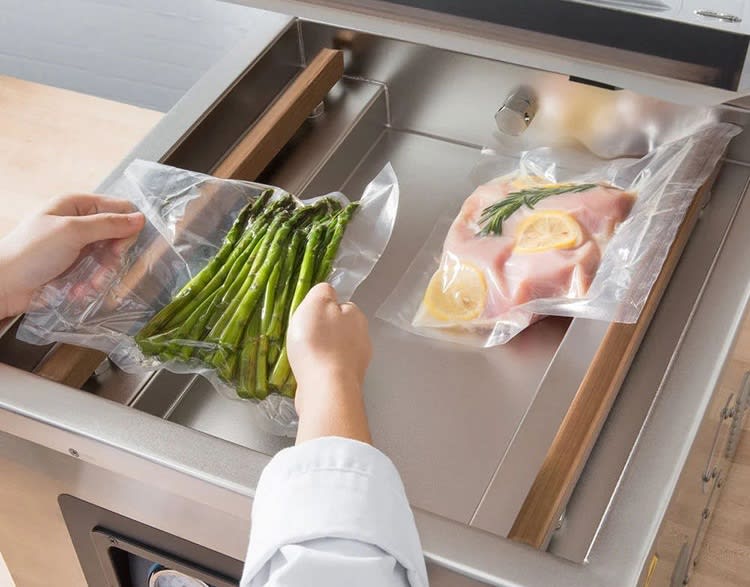
Vacuum packaging can be a useful tool for food businesses, but when used incorrectly, it can also create serious food safety risks. Because of this, health authorities have strict rules around which foods can be vacuum sealed and how they must be handled.
Recent guidance from Fraser Health highlights why vacuum packaging requires extra care and, in some cases, special approval. If you plan to use a Vac Pack, it’s essential to understand when vacuum sealing is allowed, when it’s risky, and how to protect your customers and your business.
Why Vacuum Packaging Can Be High Risk
Vacuum sealing removes oxygen from the package. While this helps preserve food, it can also create the perfect environment for anaerobic bacteria - bacteria that grow without oxygen.
One of the most serious concerns is Clostridium botulinum, the bacteria that produces botulinum toxin. This toxin:
- Is invisible and odorless
- Can grow at refrigeration temperatures as low as 3.3°C
- Can cause severe illness, even in very small amounts
Because of these risks, vacuum sealing is not automatically allowed for all foods.


When Can a Food Product Be Approved for Vacuum Packaging?
To reduce the risk of harmful bacteria, Fraser Health requires vacuum-sealed products to meet at least one of the following conditions:
Your product must:
- Have a water activity (Aw) of 0.91 or less, OR
- Have a pH of 4.6 or lower, OR
- Be a food with a high level of competing microorganisms, such as:
- Raw meat
- Raw poultry
- Raw vegetables
These conditions help prevent dangerous bacteria from growing, even in low-oxygen environments.
If your product does not meet at least one of these requirements, vacuum packaging may not be permitted without additional controls or approvals.
Common Mistakes That Increase Risk
Vacuum packaging becomes dangerous when:
- Foods are sealed without understanding pH or water activity
- Cooked or ready-to-eat foods are vacuum packed without safeguards
- Products are stored at incorrect temperatures
- Shelf life is extended without validation
- Vacuum sealing is used as a preservation method instead of a packaging method
Vacuum sealing does not make unsafe food safe, and it does not replace proper food safety controls.

How to Reduce Risk When Using a Vac Pack
If vacuum packaging is permitted for your product, risk can be reduced by:
- Understanding your product’s pH and water activity
- Following approved storage temperatures at all times
- Clearly labeling products with dates and handling instructions
- Limiting shelf life unless otherwise approved
- Never vacuum sealing food “just to make it last longer”
- Checking with your local health authority before changing packaging methods
When in doubt, ask before you seal.
Final Thought: Safety First, Always
Vacuum packaging is a powerful tool, but only when used correctly and responsibly. Understanding the risks, following health authority guidelines, and knowing whether your product qualifies are essential steps to protecting your customers and your business.
Food safety isn’t just about compliance, it’s about trust.