
Why food storage matters for your business
Good storage protects your customers and your business. When you store food correctly, you:
- Prevent food from spoiling too early
- Reduce waste and save money
- Avoid cross-contamination between raw and ready-to-eat foods
- Meet health inspection standards in a licensed kitchen
Dry Storage: shelf-stable ingredients
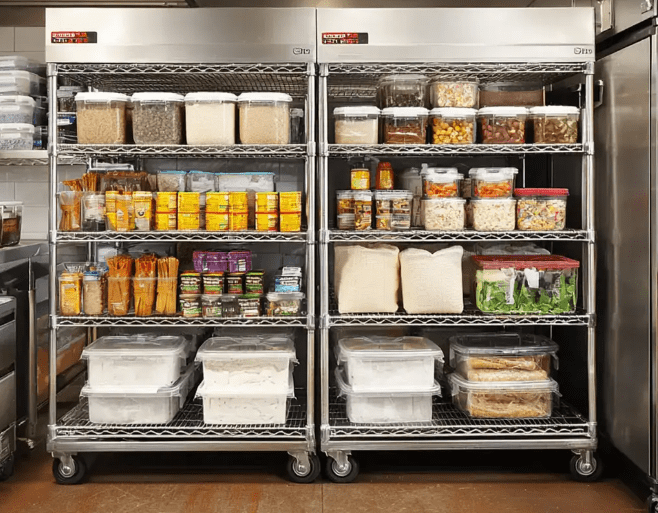
Dry storage is for foods and products that do not need to be kept cold. Think flour, sugar, rice, pasta, spices, oils, canned goods, and packaged goods.
Keep these tips in mind:
- Store items off the floor. Use shelves so air can move and cleaning is easy. A common guideline is at least 15 cm (6 inches) off the floor.
- Use sealed, labelled containers. This protects food from pests, moisture, and dust.
- Keep the area cool, dry, and clean. Heat and humidity can shorten shelf life.
- Store chemicals separately. Cleaning products should never sit near food or packaging.
Cooler Storage: keep it cold and organized
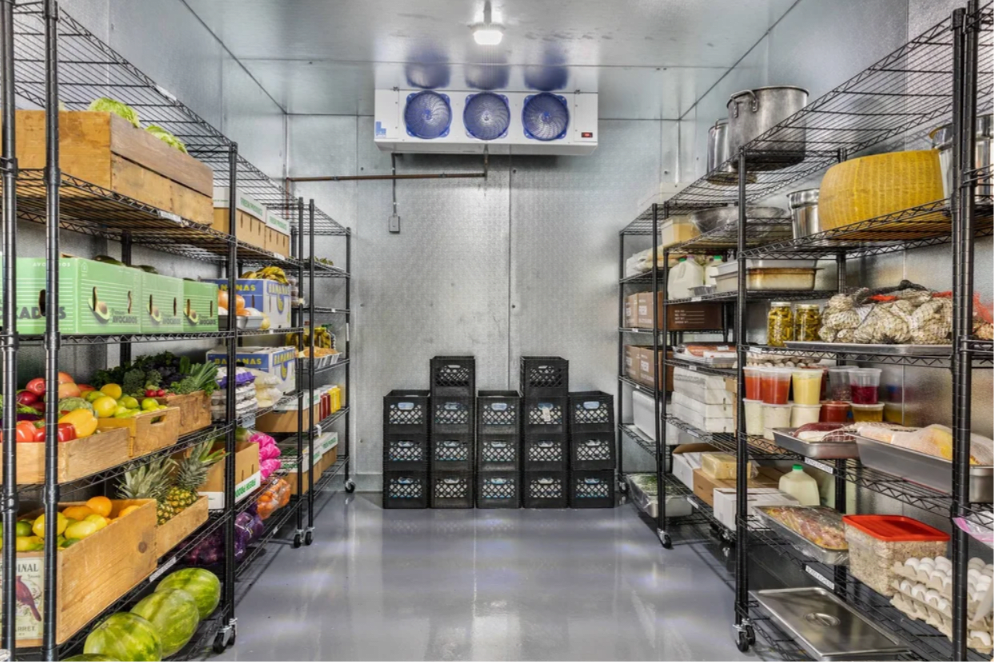
Refrigerated storage is for foods that must stay cold to stay safe. This includes dairy, eggs, fresh produce, cooked foods, and raw meat, poultry, and seafood.
Cold foods should be kept between 4°C (40°F) and 0°C (32°F). Check your fridge temperature often with a thermometer.
Shelf order matters. Store foods from top to bottom like this:
- Top shelves: Ready-to-eat and cooked foods
- Middle shelves: Dairy, eggs, and produce
- Bottom shelves: Raw meat, poultry, and seafood
Raw foods go on the bottom so their juices cannot drip onto other foods. Always cover and label your containers.
Frozen Storage: long-term freshness
Frozen storage is for foods you want to keep for a longer time, such as meat, seafood, prepared meals, baked goods, and dough.
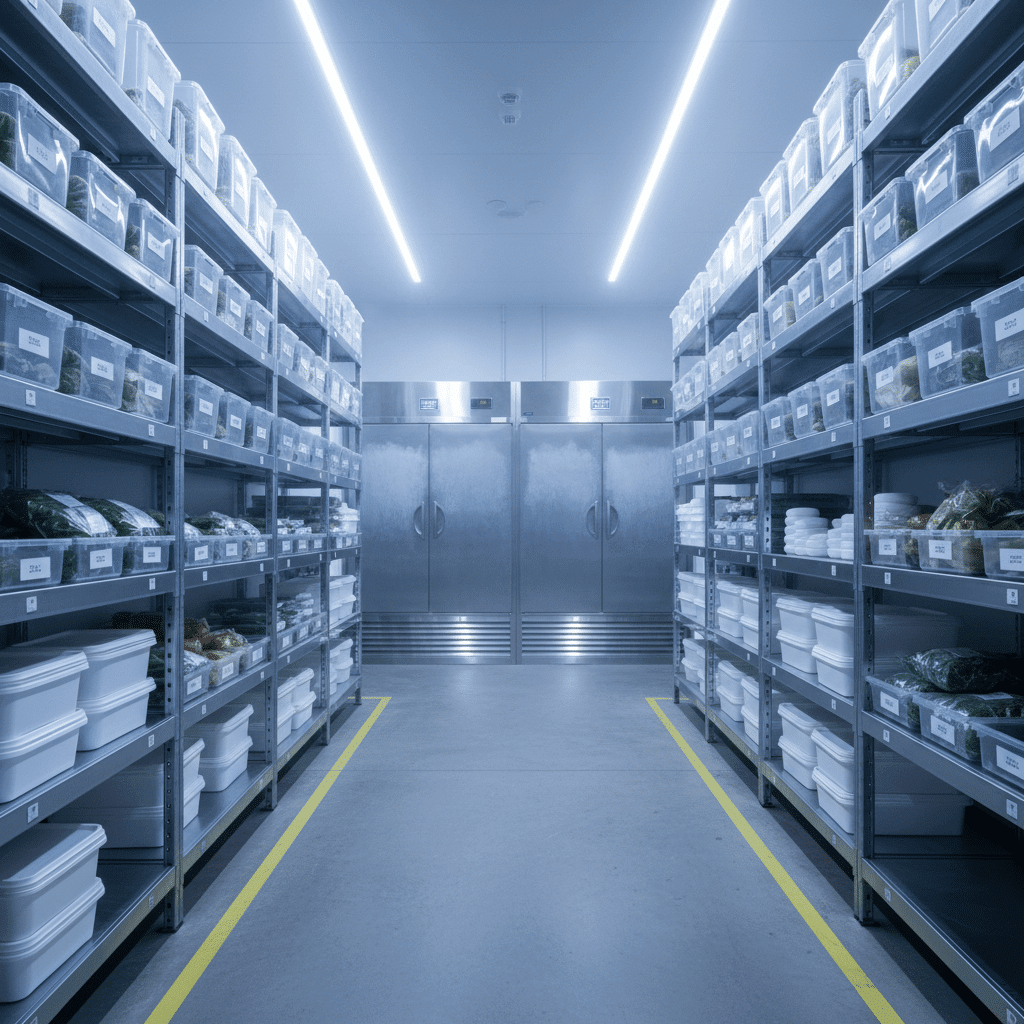
Frozen foods should be kept at -18°C (0°F) or below. A few simple habits help:
- Wrap food tightly. Airtight packaging prevents freezer burn.
- Label everything with the name and date. You will always know what you have and how long it has been there.
- Use the oldest products first. This method is called “first in, first out.”
- Thaw safely. Thaw food in the refrigerator, not on the counter.
Storage tips for a shared kitchen
Food styling does not have to be complicated. Small details make a big difference.
A few simple styling tips:
- Less is more. One or two props are enough. A linen napkin, a wooden spoon, or a small bowl of ingredients can add context without cluttering the frame.
- Show the product at its best moment. Photograph baked goods while they are still fresh. Show sauces poured, not just bottled. Capture steam if you can.
- Add a human element. A hand holding a product or reaching into frame adds warmth and scale, and performs well on social media.
- Keep your branding consistent. Use the same backgrounds, props, and color palette across your photos so your feed or website looks cohesive.
Final thoughts
Smart food storage is simple. Keep dry goods off the floor, keep cold foods cold, keep frozen foods frozen, and label everything. These habits protect your food, reduce waste, and make inspections easier. For food entrepreneurs working in a commissary kitchen in Vancouver, good storage habits are one of the easiest ways to run a professional operation.
Ready to take the next step?
Book a tour at YVR Prep and join a commissary kitchen
built for growing food businesses.